Lorsque vous effectuez un achat via les liens présents sur notre site, nous pouvons percevoir une commission d'affiliation. Voici comment cela fonctionne.

Meilleur processeur pour le jeu
Our picks below will show you the best CPU for gaming. Of course, when shopping for the best CPU for gaming, you’ll want to balance performance and features with your budget. You can also see how all of these processors stack up in our CPU benchmarks hierarchy, and for detailed help on picking the best processor, you can check out our CPU Buying Guide. And if you’re on the fence about which CPU maker to go with, our AMD vs. Intel article dives deep into the topic and comes up with a winner.
AMD’s Ryzen 7 9800X3D is now the fastest gaming chip on the planet, and it isn’t even close — the fastest AMD CPU for gaming is a whopping 35% faster in 1080p gaming than Intel’s competing flagship Core Ultra 9 285K, and 30% faster than Intel’s previous-gen flagship, the Core i9-14900K. This chip has been hard to find, but it’s definitely worth continuing to look for.
The 9800X3D is on the pricey side with a $480 MSRP, and its limited availability often finds it selling for far higher prices, but this chip delivers the pinnacle of gaming performance. AMD’s previous-gen Ryzen 7 7800X3D is still a great buy for gaming, and we expect to see good sales on it now that it is officially a last-gen product, but it does lag the 9800X3D by 15% in gaming. However, AMD has also improved the 9800X3D’s performance in applications, giving it another advantage over the prior-gen model.
We recently reviewed AMD’s new Ryzen 9 9900X3D, but we found that the chips’ close proximity to the company’s own other gaming chips makes the price tag hard to justify. You shouldn’t opt for this chip unless we see a significant drop in pricing.
If you need bleeding-edge gaming performance and the full performance in productivity work, the higher-tier Ryzen 9 9950X3D is the chip for you. Zero compromises. That was AMD’s mission when it designed the 9950X3D; from our testing, that mission was a rousing success. The second-gen revision of 3D V-Cache propels the 16-core, 32-thread $699 Ryzen 9 9950X3D to a whole new level of gaming performance — all while preserving the full performance in productivity applications, a first for AMD’s gaming-optimized X3D chips.
AMD’s standard Ryzen 9000 models made a somewhat underwhelming debut due to lackluster gen-on-gen gaming performance improvements, but recent firmware and operating system tweaks that improved performance, not to mention some price cuts, have made them far more competitive. As such, we’ve added the Ryzen 5 9600X and Ryzen 7 9700X to our list for their strong level of gaming performance at their price points.
Here’s the shortlist of our buying recommendations — use the ‘More’ links, or just simply scroll down the page, to jump to a more detailed description of each processor and its alternatives:
Le meilleur processeur pour le jeu en 2025 en bref (plus d'infos ci-dessous) :
| Processeur | Meilleur processeur pour le jeu | Alterner |
|---|---|---|
| Meilleur processeur pour le jeu : 300 à 400 $ | Ryzen 7 9800X3D (Acheter) | Ryzen 7 9700X (Acheter) | Intel Core i7-14700K (Acheter) |
| Meilleur processeur milieu de gamme pour le jeu : 200 à 300 $ | Ryzen 5 9600X (Acheter) | Core i5-14600K (Acheter) | Ryzen 7 5700X3D (Acheter) |
| Processeur le plus performant pour le jeu : plus de 400 $ | AMD Ryzen 9 9950X3D (Acheter) | Core i9-14900K (Acheter) |
| Meilleur processeur économique pour le jeu : 100 $ à 150 $ | Core i5-12400 (Acheter) | AMD Ryzen 5 5600 (Acheter) |
| Meilleur processeur d'entrée de gamme pour le jeu : (iGPU) | Ryzen 5 8600G (Acheter) | AMD Ryzen 5 5600G (Acheter) |
The list below is for the best CPUs for gaming, while our list of best CPUs for workstations is for those who frequently tackle high-end content creation or professional work, while the best budget CPUs can help you find a cheap chip. Processors benefit from the best thermal paste, so check out our guide if you’re shopping for a new processor. But if you’re after the best CPU for gaming, you’re in the right place.
Meilleur processeur pour les benchmarks de jeux
Why you can trust Tom’s Hardware Nos experts passent des heures à tester et comparer les produits et services afin de vous aider à choisir celui qui vous convient le mieux. Découvrez comment nous procédons.
Image 1 sur 11


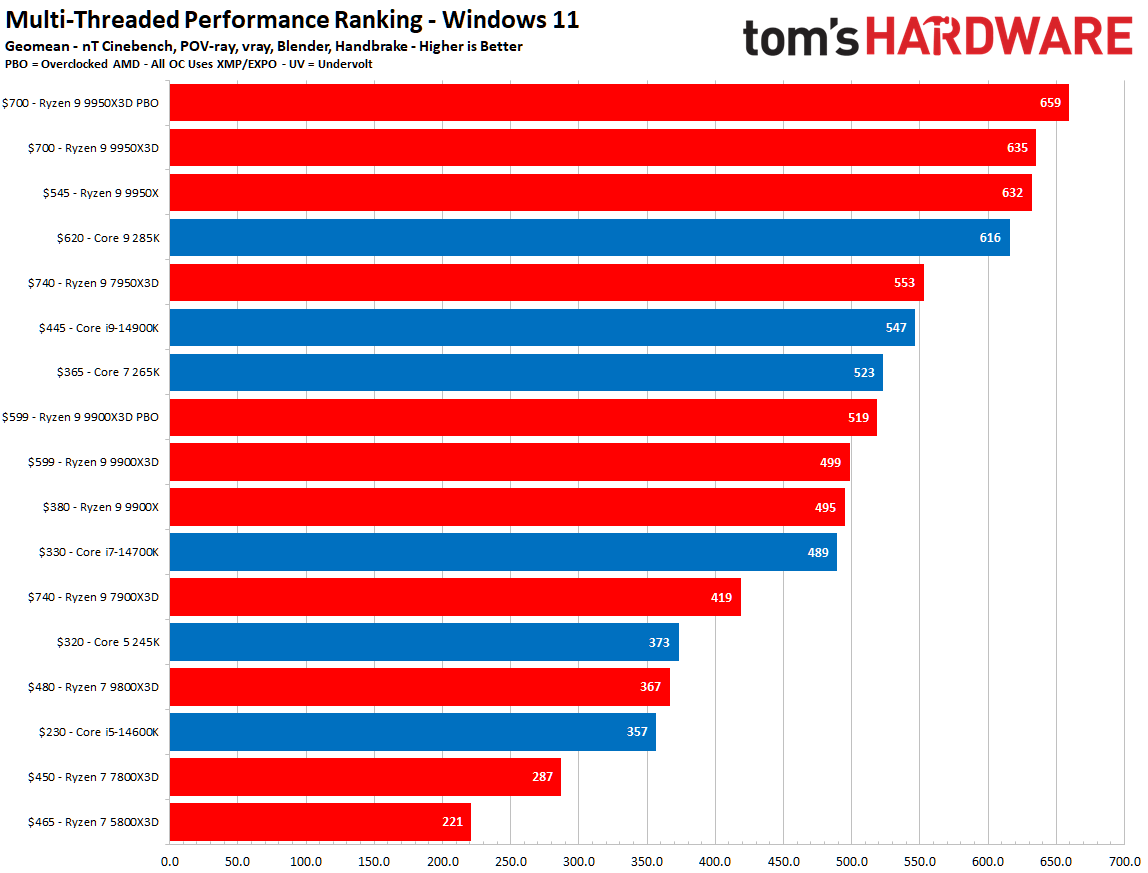
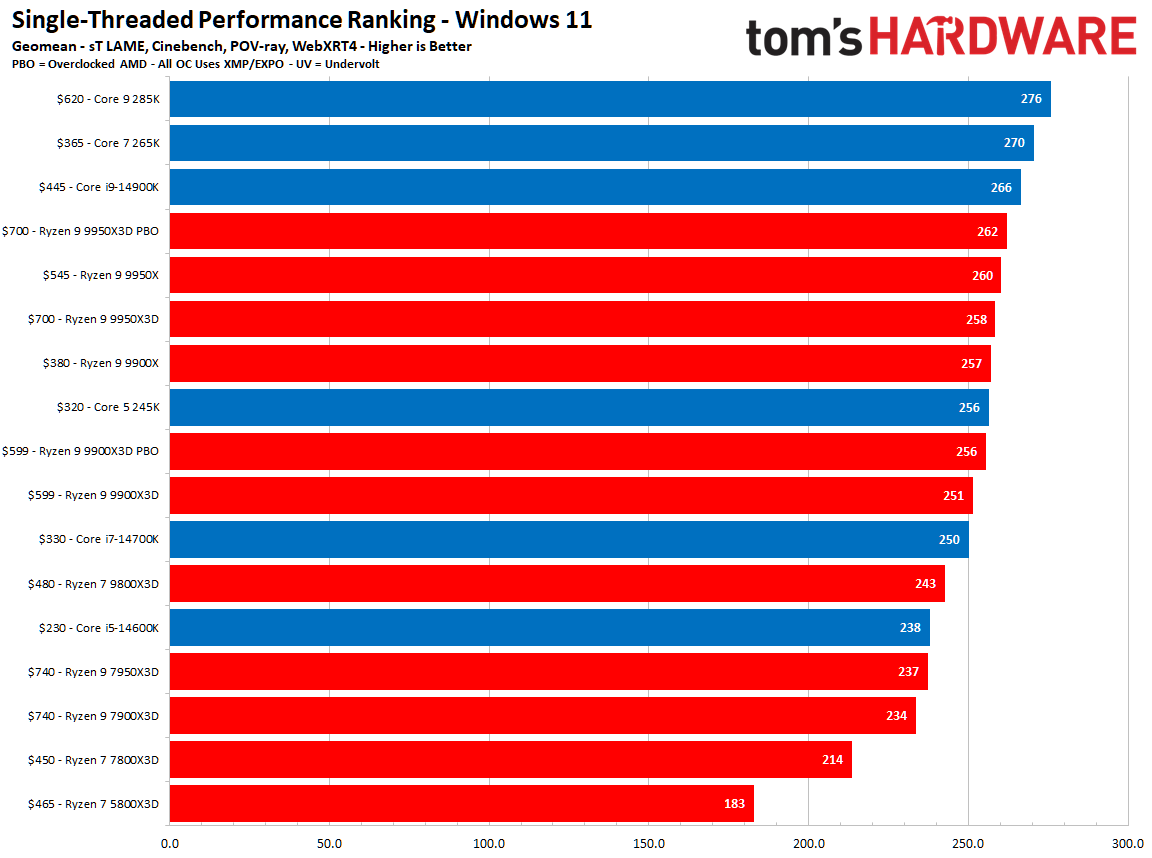
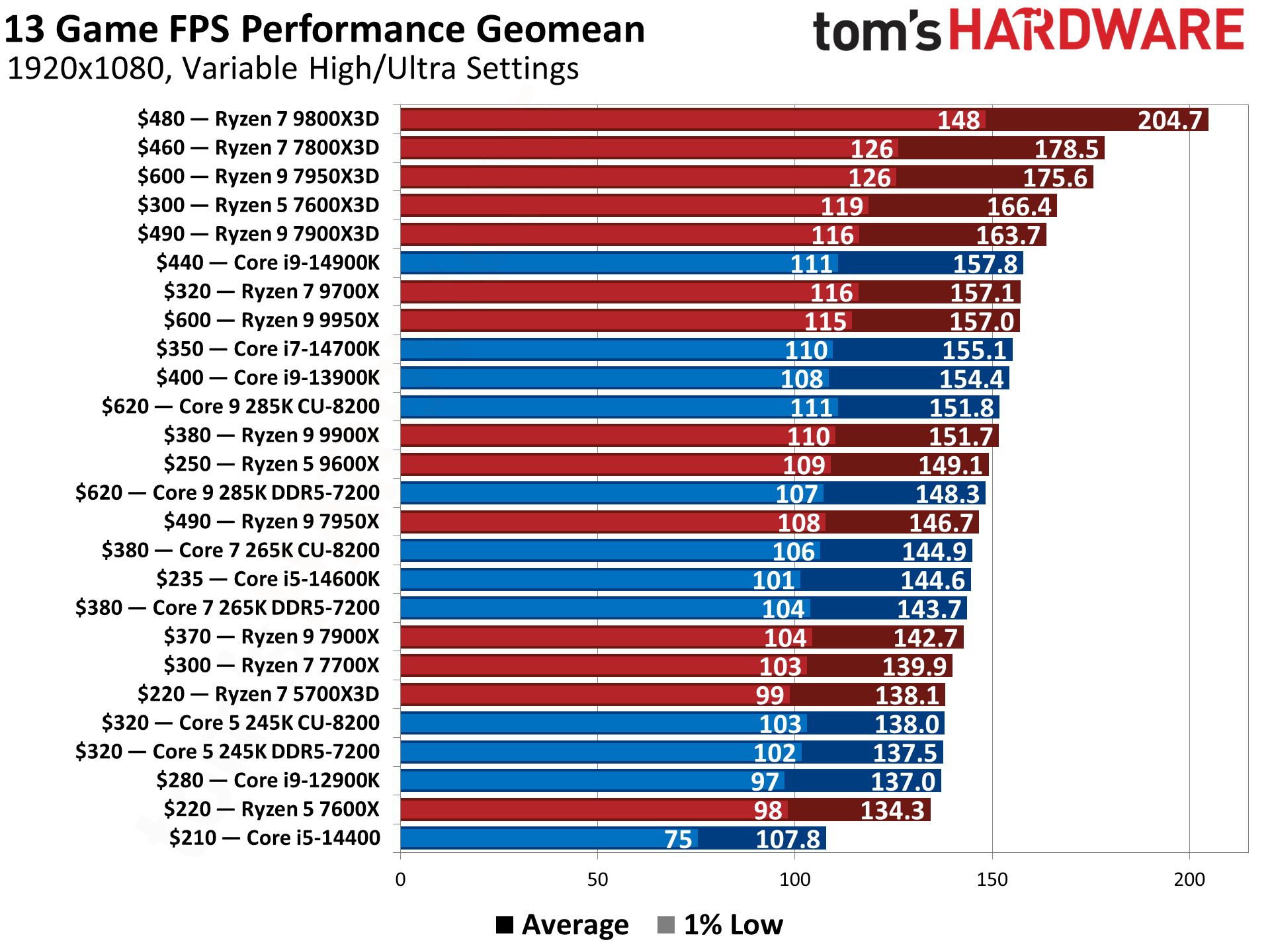
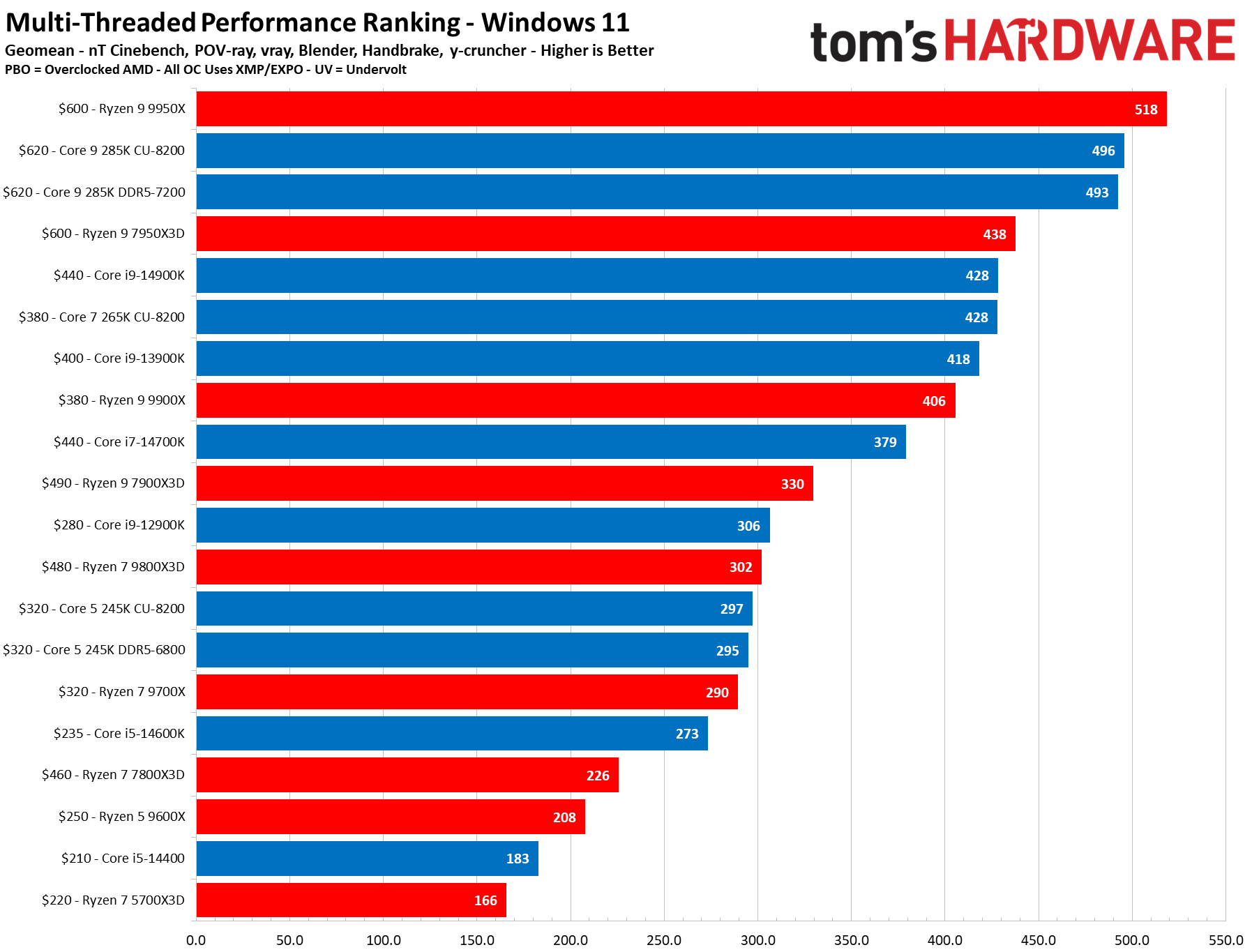
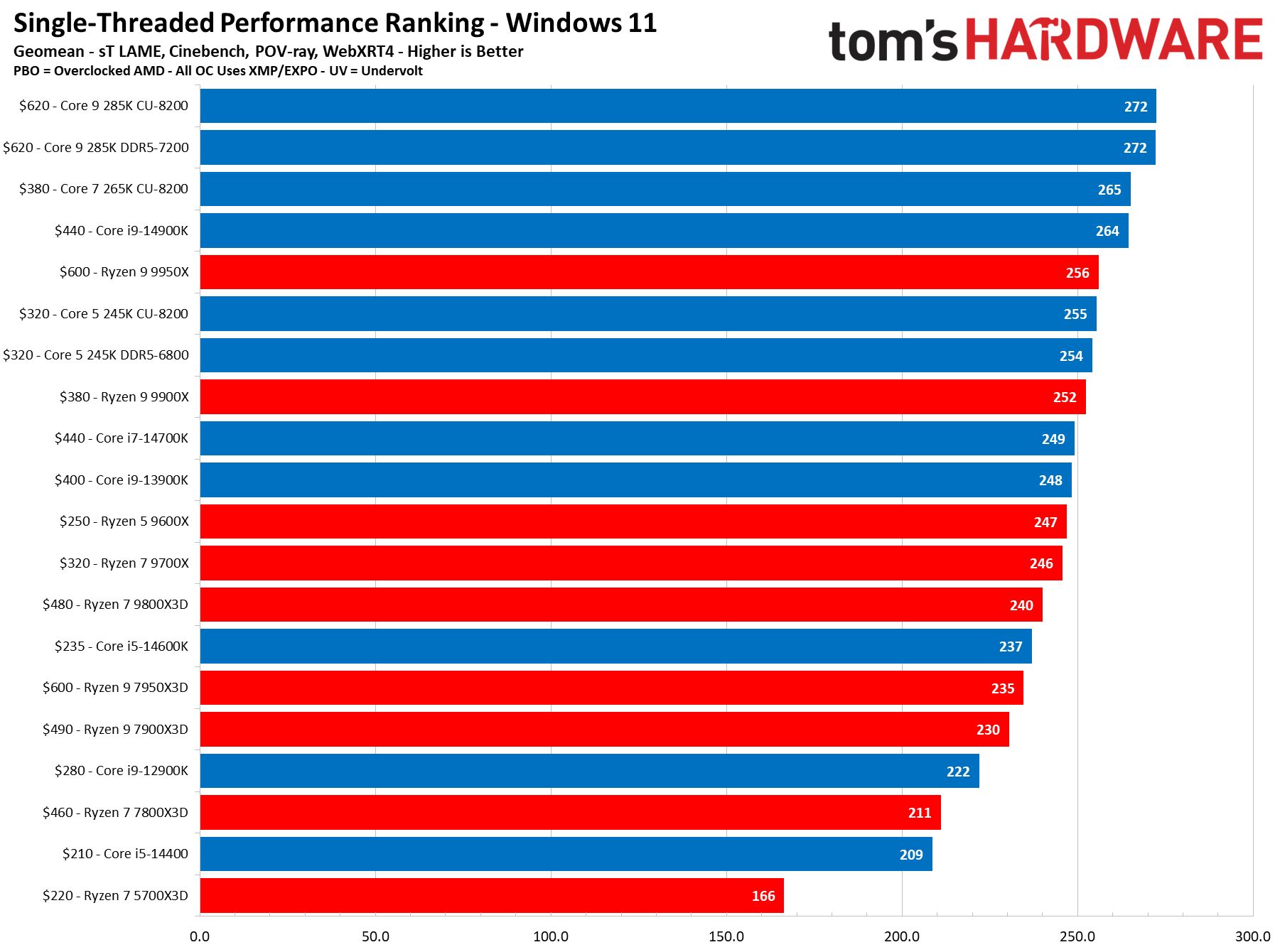
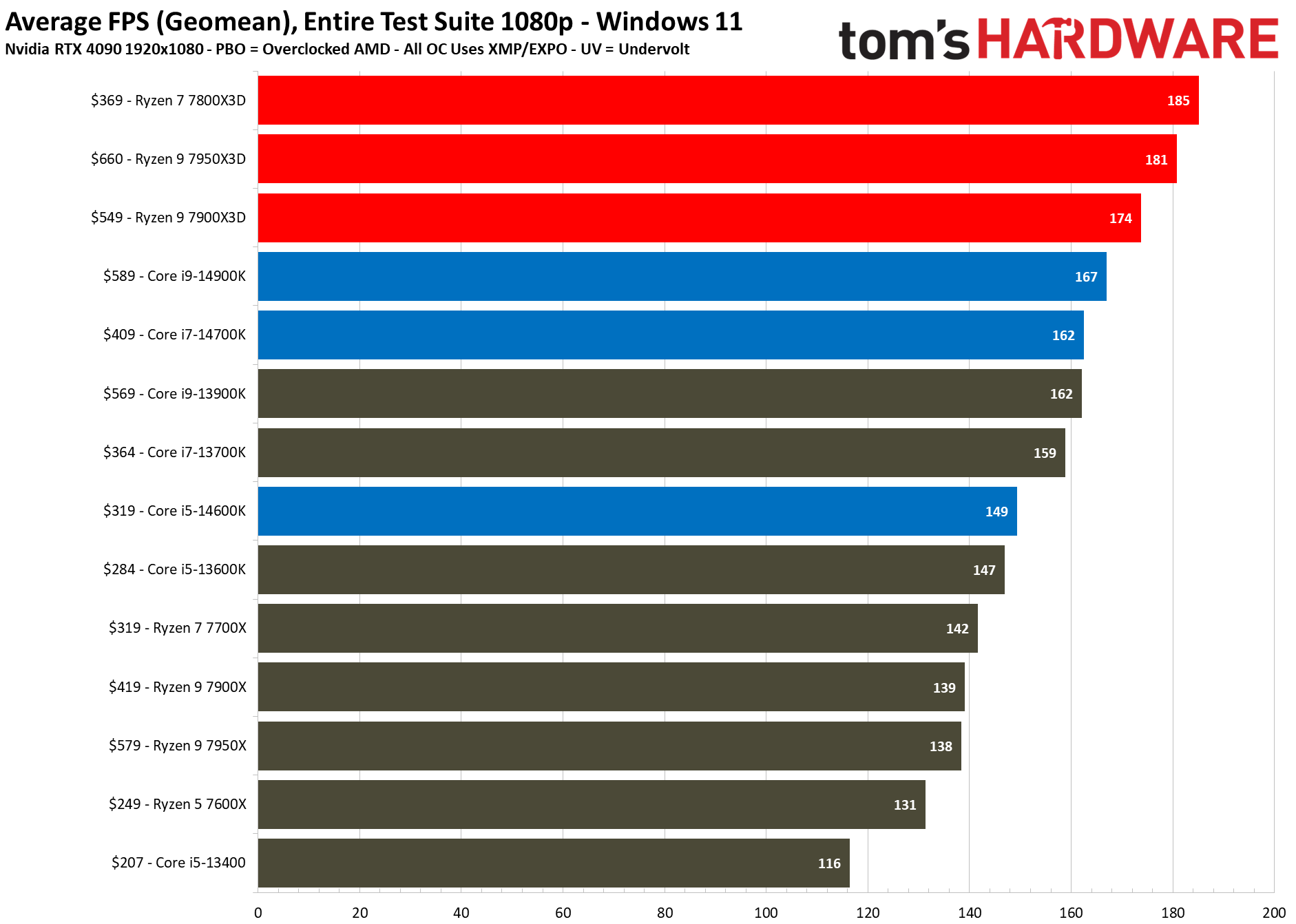
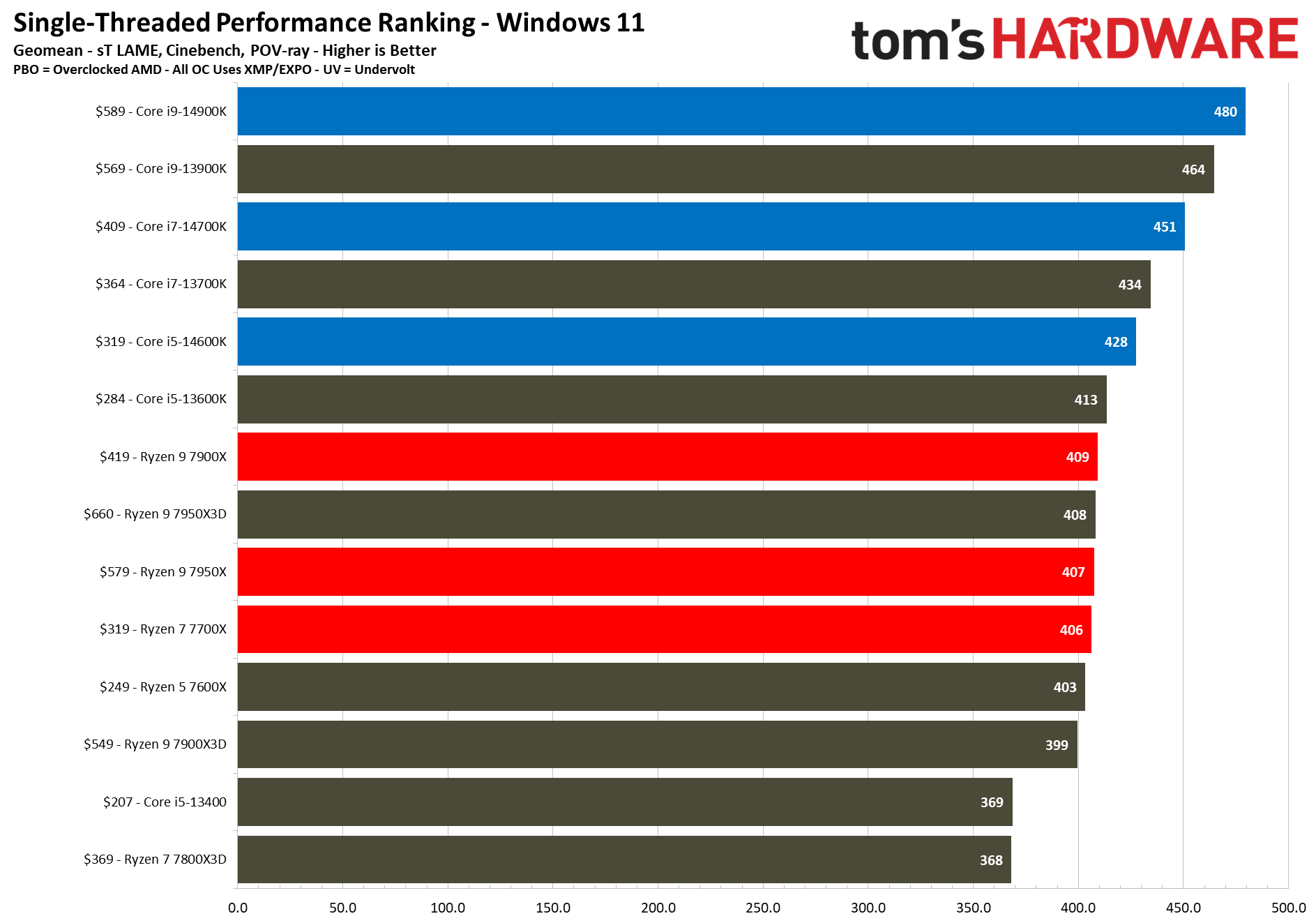
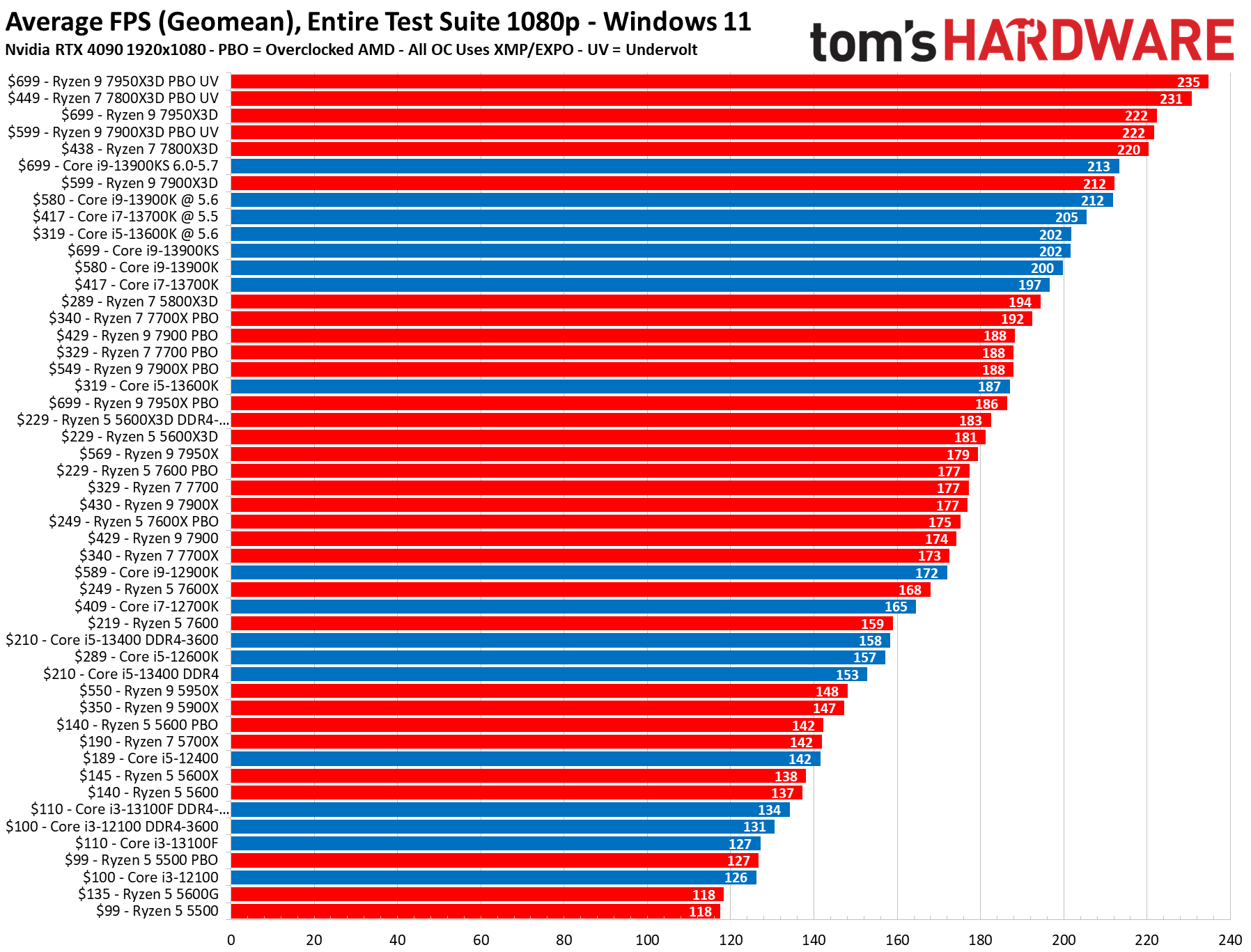
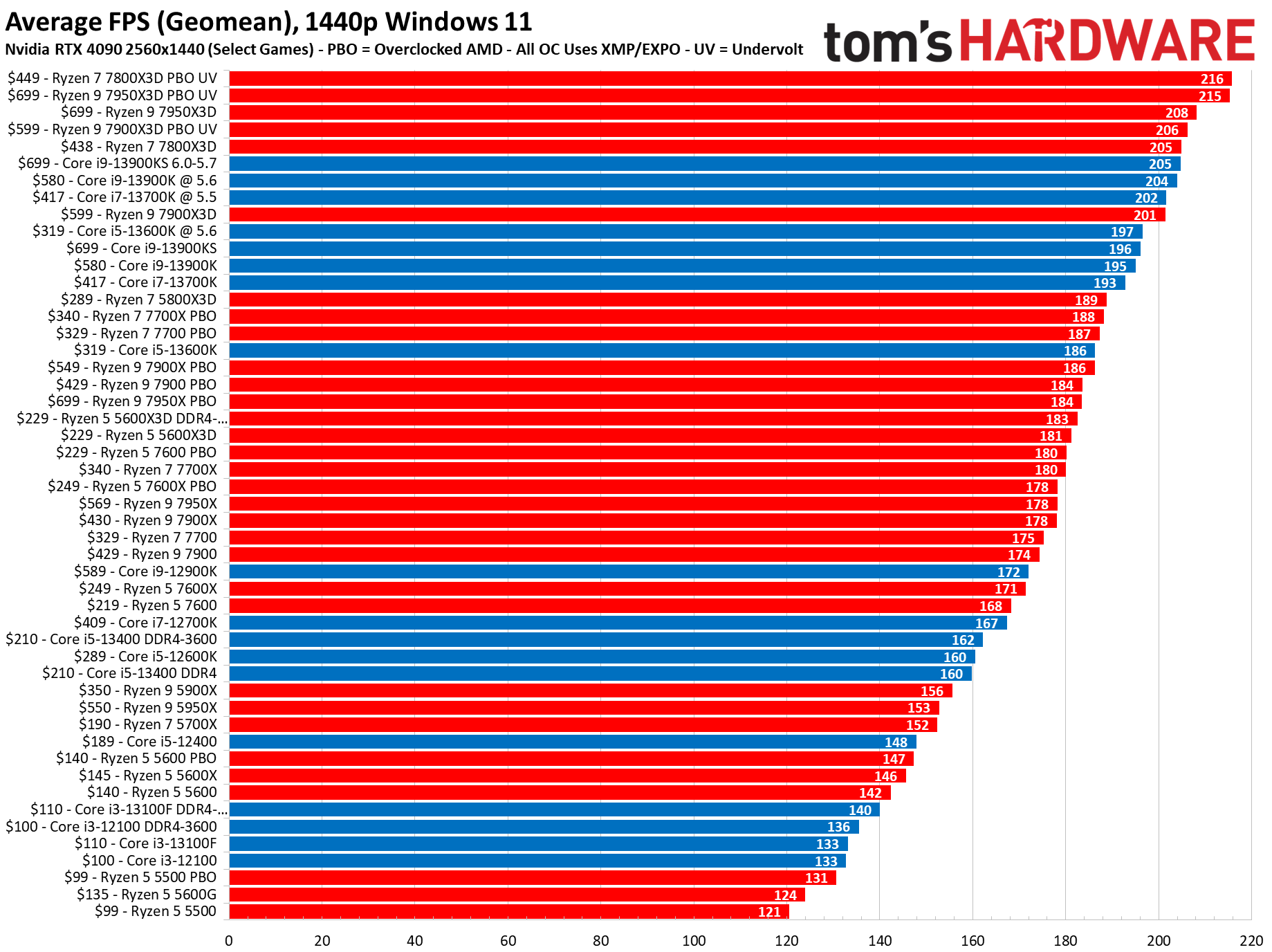
We rank all the Intel and AMD processors based on our in-depth CPU benchmarks hierarchy. You can see some of those numbers in the charts above, including CPU overclock performance results (marked as PBO for AMD processors). We’re currently retesting all of these processors with the Nvidia RTX 5090, but only the first four slides have that testing. The remainder are historical testing results with the RTX 4090, which we’ll remove once we have fully retested all of the gaming CPUs with the RTX 5090 for our benchmarks. This group of results comprises only the chips that have passed through our newest test suite. Additionally, the tables in our CPU benchmark hierarchy include rankings based on past CPU benchmarks and breakdowns of single- and multi-threaded performance in productivity applications across a broad spate of processors. Finally, be aware that the pricing in the charts above can fluctuate.
Conseils pour faire des achats rapides
Lors du choix du meilleur processeur pour les jeux en 2025, tenez compte des éléments suivants :
- You can’t lose with AMD or Intel: Comme indiqué dans notre article comparatif AMD vs Intel, AMD a tendance à fabriquer les meilleurs processeurs polyvalents pour le jeu sur PC grand public ces derniers temps, mais les deux offrent des options de performances intéressantes à tous les niveaux de prix.
- Pour les jeux vidéo, la fréquence d'horloge est généralement plus importante que le nombre de cœurs : Fréquences d'horloge du processeur plus élevées en général Cela se traduit par des performances plus rapides pour les tâches simples comme les jeux vidéo, tandis qu'un plus grand nombre de cœurs vous permettra de traiter plus rapidement les charges de travail importantes.
- Budget pour un système complet : Don’t pair a strong CPU with weak storage, RAM, and graphics.
- L'overclocking n'est pas fait pour tout le monde, mais si vous suivez notre guide « Comment overclocker un processeur », vous pouvez obtenir des gains de performance supplémentaires.
Best CPU for Gaming 2025 – $300 to $400
1. AMD Ryzen 7 9800X3D
Meilleur processeur pour le jeu
Caractéristiques
Architecture : Zen 4
Socket : AM5
Cœurs/Threads : 8/16
Fréquence de base : 4,7 GHz
Fréquence de boost maximale : 5,2 GHz
TDP : 120 W
Today’s Best Deals
Raisons d'acheter
+
Le processeur de jeu le plus rapide que l'argent puisse acheter+
Performance de productivité+
Consommation d'énergie et efficacité+
Exigences de refroidissement raisonnables+
Entièrement overclockable
Raisons d'éviter
–
Des puces de prix similaire sont plus rapides en termes de productivité.
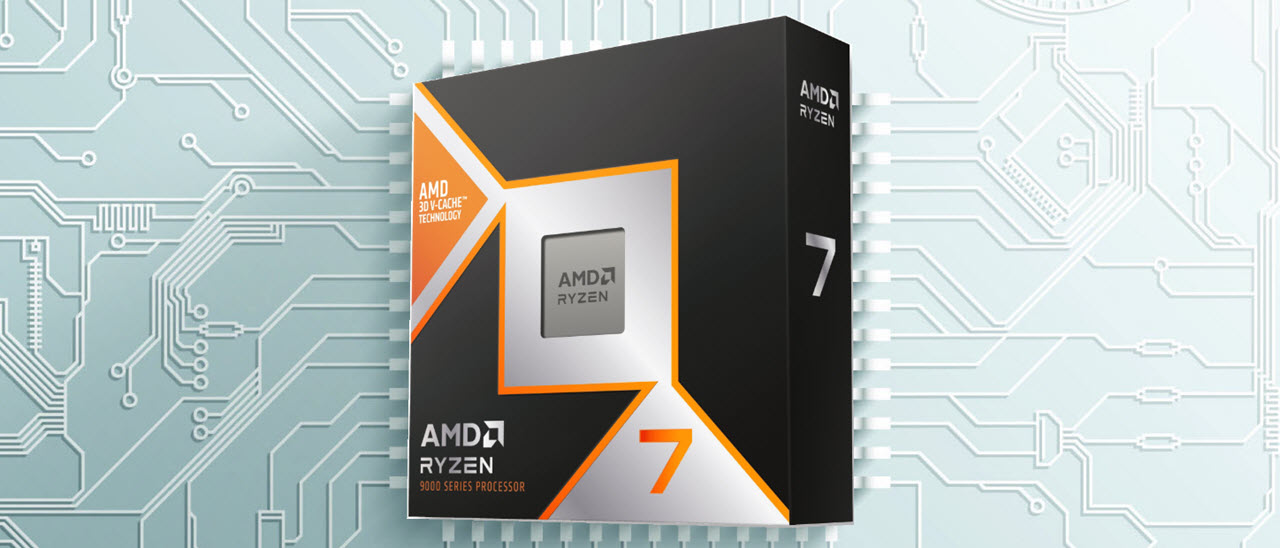
The Ryzen 7 9800X3D is not only AMD’s fastest gaming chip but also the fastest available on the market. It easily beats Intel’s more expensive competitors, not to mention AMD’s own lineup. At $480, the Ryzen 7 9800X3D is both the fastest gaming CPU on the market and a solid value in the high-performance category.
This chip really has no peer in the market — the Ryzen 7 9800X3D delivers outstanding gaming performance, beating Intel’s fastest gaming chip, the $440 Core i9-14900K, by 30% in our test suite. The 9800X3D is also almost unbelievably 35% faster than the current-gen Intel flagship, the $629 Core Ultra 9 285K. The stock Ryzen 7 9800X3D’s 1% low frame rates (a good smoothness indicator) also deliver an exceptionally smooth gaming experience, benefiting gamers even in GPU-limited scenarios.
The Ryzen 7 9800X3D has eight cores and 16 threads that operate at a 4.7 GHz base and 5.2 GHz boost clock rate. The chip employs AMD’s 3D V-Cache tech with a new spin, which places a 3D-stacked SRAM chiplet underneath the die to deliver an incredible 96MB of L3 cache to great effect. AMD moved the L3 cache chiplet from the top to the bottom of the compute die this generation to improve performance in productivity applications, and the end result is a comparatively low-power chip that delivers incredible gaming performance and comparable productivity performance to other eight-core models on the market.
You have to be aware of the tradeoffs with this highly specialized chip — our gaming benchmarks show that the 3D V-Cache doesn’t boost performance in all games, though we found that it impacted nearly every title we tested.
The Ryzen 7 9800X3D has much lower power consumption than the Intel competition, making it a far cooler processor that won’t require as expensive accommodations, like a beefy cooler, motherboard, and power supply. That means the 9800X3D delivers top-notch gaming performance and a cooler, quieter, and less expensive system than you’ll get with an Ultra 9 or Core i9.
AMD Ryzen 7 9700X
Meilleur processeur pour le jeu (toutes catégories confondues) — Premier choix alternatif
Caractéristiques
Architecture : Zen 5
Socket : AM5
Cœurs/Threads : 8 / 16
Fréquence de base : 3,8 GHz
Fréquence de boost maximale : 5,5 GHz
TDP : 65 W
Today’s Best Deals
Raisons d'acheter
+
Excellentes performances de jeu pour le prix+
Prix corrects+
Faible consommation d'énergie, excellente efficacité+
Facile à refroidir+
Performances monocœur de pointe+
Prise en charge native d'AVX-512
Raisons d'éviter
–
Glacière non incluse.
Surpasse ses concurrents dans les tâches de productivité à forte intensité de traitement.
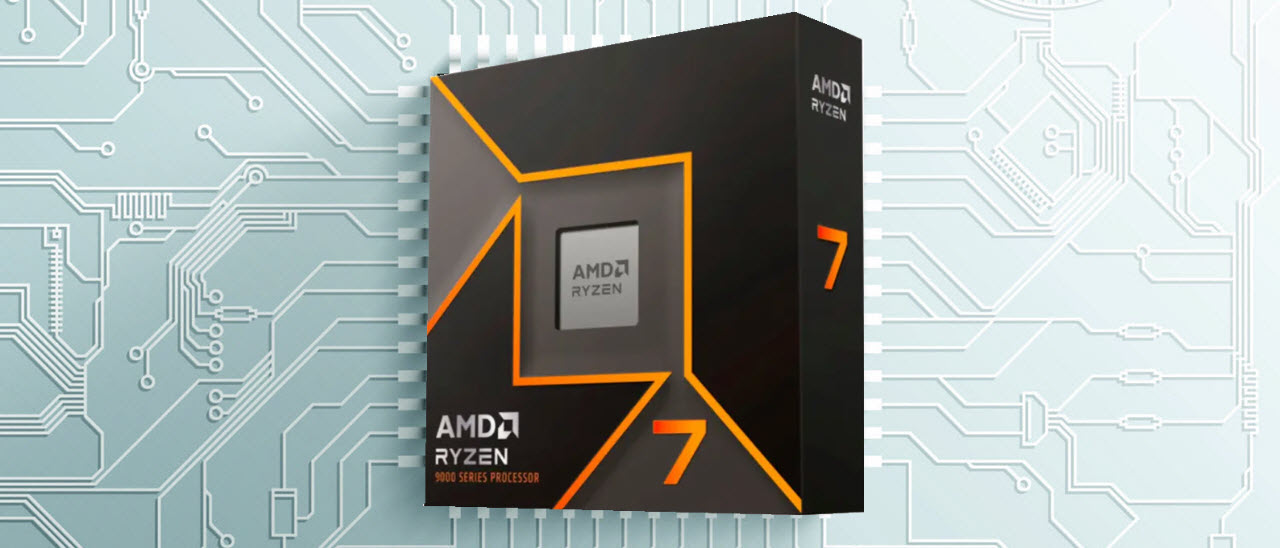
The $318 Ryzen 7 9700X had a rough initial product launch, but AMD’s targeted firmware and operating system improvements have changed the picture tremendously, allowing the chip to place much higher on our CPU benchmark hierarchy (head there for the most up-to-date gaming benchmarks). Combined with its $40 lower-than-launch pricing, the Ryzen 7 9700X is a strong contender, tying Intel’s Core i9-14900K in gaming and beating the Core i7-14700K, as well. That’s not to mention that it beats Intel’s entire lineup of new Core Ultra processors as well. Now, all of those processors offer faster performance in heavily-threaded productivity applications than the 9700X, but when it comes to just a pure gaming experience, the 9700X either ties or beats all competitors.
The Ryzen 7 9700X has eight Zen 5 cores with 16 threads that operate at a 3.8 GHz base and 5.5 GHz boost clock. The chip has a 65W TDP, though AMD retroactively added a 105W TDP option you can select in the BIOS that helps boost performance in productivity applications. With either setting, the 9700X has comparatively tame power consumption, so it is an easy chip to cool. You’ll have to buy your own cooler for the processor, though.
The Ryzen 7 9700X drops into socket AM5 motherboards, and B-series motherboards make the most sense for this class of chip. AMD’s partners have plenty of 600-series ‘B’ motherboards on the market that will make a good pairing with this chip. However, the much-anticipated B850 and B840 motherboards will not arrive until early next year.
Intel Core i7-14700K
Meilleur processeur pour le jeu (deuxième choix alternatif)
Caractéristiques
Architecture : Raptor Lake Refresh
Socket : LGA 1700
Cœurs/Threads : 20 (8P+12E) / 28
Fréquence de base : 3,4 GHz
Fréquence de boost maximale : 5,6 GHz
Puissance de base du processeur : 125 W
Today’s Best Deals
Raisons d'acheter
+
Prix+
Quatre cœurs électroniques supplémentaires pour améliorer la productivité au travail+
Performances de jeu globalement équivalentes à celles du processeur 14900K+.
Performances mono- et multithread+
PCIe 5.0 et mémoire DDR5+
overclockable
Raisons d'éviter
–
Glacière non incluse.
Consomme plus d'énergie que Ryzen
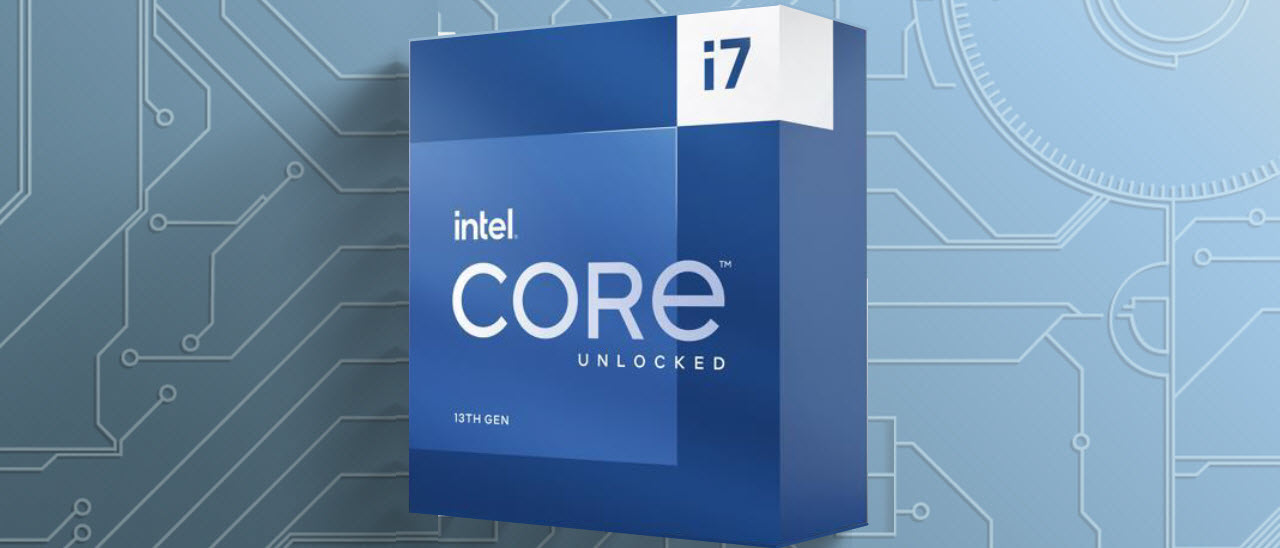
Intel boosted the Core i7-14700K’s core count by adding four more e-cores and tweaked the boost clock rate, but left its recommended pricing the same as the prior-gen model. At $339, the 14700K delivers essentially the same gaming performance as Intel’s own flagship $435 Core i9-14900K — but for significantly less. You can also discard the integrated graphics engine and get the otherwise identical Core i7-14700KF for $327.
As always, if you aren’t after top performance in heavy productivity tasks, the Core i7 model takes the shine off the Core i9. The Core i7-14700K is a great high-performance gaming chip at its price point, offering 97% of the flagship Core i9-14900K’s performance for $90 less. Better yet, you can overclock the chip and get basically identical performance to the stock Core i9-14900K.
Our benchmarks show the Core i7-14700K is a much better all-rounder than Ryzen if you’re looking for performance in productivity work. The Core i7-14700K has eight P-cores (high-performance) and 12 E-cores (efficiency), for a total of 28 threads. The P-cores run at a 3.4 / 5.6 GHz base/boost, while the E-cores weigh in at 2.5 / 4.3 GHz. In addition, the execution engine is fed by 33MB of L3 cache and 28MB of L2.
Le 14700K prend également en charge une connectivité de pointe avec la prise en charge de la DDR4-3200 ou jusqu'à Le processeur 14700K prend en charge la mémoire DDR5-5600, ainsi que 16 lignes PCIe 5.0 et quatre lignes PCIe 4.0 supplémentaires pour les SSD M.2. Sa consommation électrique est de 125 W (PBP de base) et de 253 W (MTP de crête).
You’ll need to buy a capable cooler for the chip, and you’ll also need a new 700-series or previous-gen 600-series motherboard. You can find a wide selection of high-end motherboards that support DDR5 memory, and although you’ll only find lower-end and mid-range DDR4 motherboards, there’s still plenty of selection available. Gamers will enjoy the lower price option of selecting DDR4, but it does come with 5 to 8% lower performance in gaming. You can upgrade to the slightly more expensive DDR5 if you need access to more memory throughput.
Mid-Range Best CPU for Gaming – $200 to $300
2. AMD Ryzen 5 9600X
Processeur milieu de gamme idéal pour les jeux
Caractéristiques
Architecture : Zen 5
Socket : AM5
Cœurs/Threads : 6 / 12
Fréquence de base : 3,9 GHz
Fréquence de boost maximale : 5,4 GHz
TDP : 65 W
Today’s Best Deals
Raisons d'acheter
+
Excellentes performances de jeu pour le prix+
Prix corrects+
Faible consommation d'énergie, excellente efficacité+
Facile à refroidir+
Performances monocœur de pointe+
Prise en charge native d'AVX-512
Raisons d'éviter
–
Glacière non incluse.
Surpasse ses concurrents dans les tâches de productivité à forte intensité de traitement.
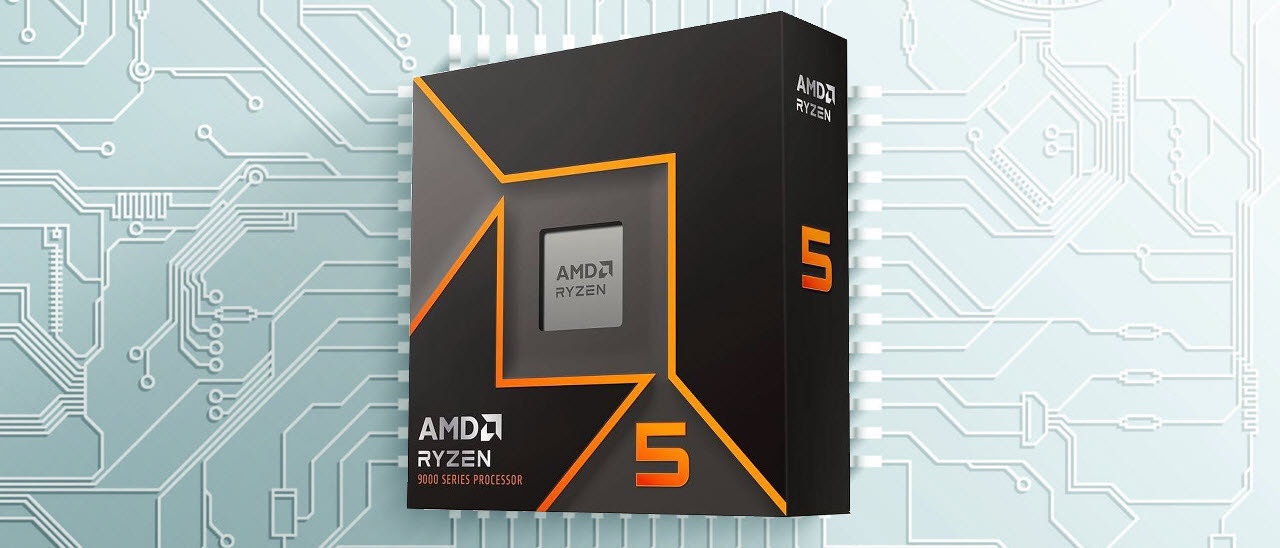
The $240 Ryzen 5 9600X had a rough start, but AMD’s targeted firmware and operating system improvements have changed the picture tremendously, allowing the chip to place much higher on our CPU benchmark hierarchy (head there for the most up-to-date gaming benchmarks). Combined with its $40 lower-than-launch pricing, the Ryzen 5 9600X is a strong contender in the sub-$250 weight class.
The Ryzen 5 9600X has six Zen 5 cores with 12 threads that operate at a 3.9 GHz base and 5.4 GHz boost clock. The chip has a 65W TDP, though AMD retroactively added a 105W TDP option you can select in the BIOS that helps boost performance in productivity applications. With either setting, the 9600X has comparatively tame power consumption, so it is an easy chip to cool. You’ll have to buy your own cooler for the processor, though.
The Ryzen 5 9600X drops into socket AM5 motherboards, and B-series motherboards make the most sense for this class of chip. AMD’s partners have plenty of 600-series ‘B’ motherboards on the market that will make a good pairing with this chip. However, the much-anticipated B850 and B840 motherboards will not arrive until early next year.
Intel Core i5-14600K
Meilleur processeur milieu de gamme pour le jeu — Choix alternatif
Caractéristiques
Architecture : Raptor Lake Refresh
Socket : LGA 1700
Cœurs/Threads : 14 (6P + 8E) / 20
Fréquence de base : 3,5
Fréquence d'amplification maximale : 5,3
Puissance de base du processeur : 125 W
Today’s Best Deals
Raisons d'acheter
+
Performances de jeu exceptionnelles+
Prix compétitifs +
PCIe 5.0 et mémoire DDR5+
overclockable
Raisons d'éviter
–
Glacière non incluse
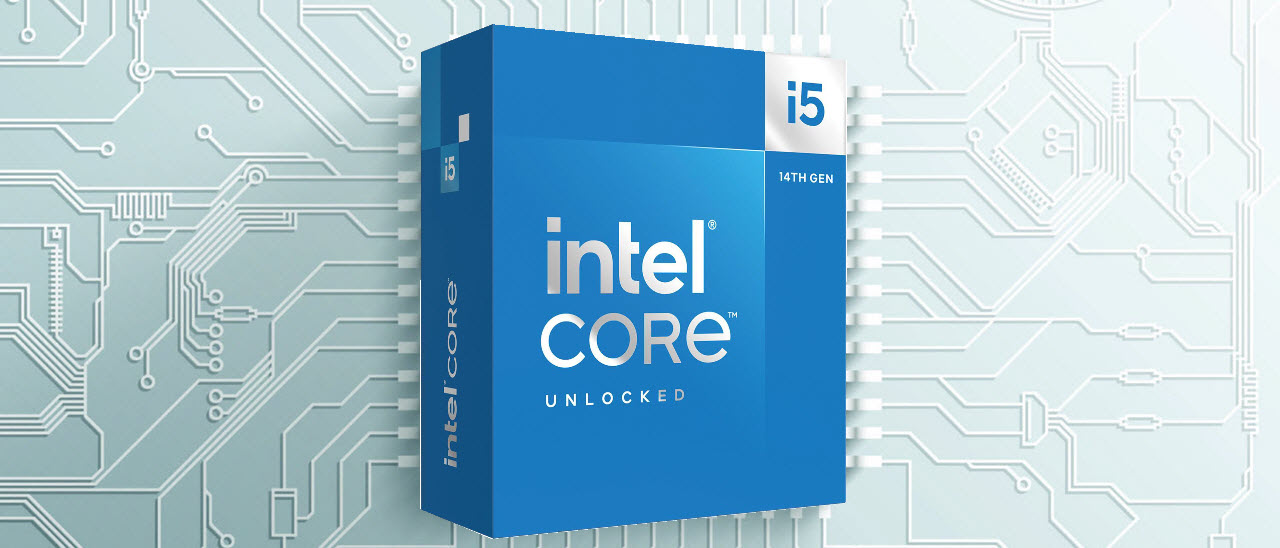
Our in-depth testing shows that the $235 Core i5-14600K is a strong gaming chip. You can also sacrifice the integrated graphics engine — you won’t need it if you have a discrete GPU — and go with the $200 Core i5-14600KF and get the same level of performance. Intel has since released the newer $320 Core Ultra 5 245K, but it offers virtually the same performance in gaming as the Core i5-14600K, but for $85 more. That leaves the Core i5-14600K as the better option in this price range for now.
The Core i5-14600K comes with six threaded P-cores that operate at 3.5 / 5.3 GHz and four E-cores that run at 2.6 / 4.0 GHz, for a total of 20 threads. That’s paired with 20MB of L3 and 24MB of L2 cache.
La puce prend en charge 16 lignes PCIe 5.0 de pointe et quatre lignes PCIe 4.0 supplémentaires pour un port SSD M.2 ultrarapide. Elle est compatible avec la mémoire DDR4 et DDR5. Certains joueurs apprécieront le prix plus abordable et les performances comparables de la DDR4, mais vous pouvez opter pour la DDR5, légèrement plus chère, si vous avez besoin d'un débit mémoire supérieur.
The 14600K comes with a maximum power rating of 181W. The power consumption threshold allows the chip to work well with a wide variety of standard air and water coolers, but you’ll need to ensure your model supports the LGA 1700 socket.
Speaking of which, you’ll also need a 700 or 600-series motherboard for the processor (with 600-series, make sure the BIOS supports the chip). You can find a wide selection of high-end models that support DDR5 memory, and although you’ll find fewer lower-end and mid-range DDR4 motherboards, there’s still plenty of selection available.
AMD Ryzen 7 5700X3D
Mid-Range Best CPU for Gaming – Alternate Pick
Caractéristiques
Architecture : Zen 3
Socket : AM4
Cœurs/Threads : 8/16
Fréquence de base : 3,0 GHz
Fréquence de boost maximale : 4,1 GHz
TDP : 105 W
Today’s Best Deals
Raisons d'acheter
+
Performances de jeu exceptionnelles dans sa catégorie de prix+
Prix avantageux +
Faible consommation d'énergie, excellente efficacité+
Prise en charge des mises à niveau AM4
Raisons d'éviter
–
Performances réduites dans les applications de productivité -
Glacière non incluse.
Pas d'overclocking direct basé sur un multiplicateur
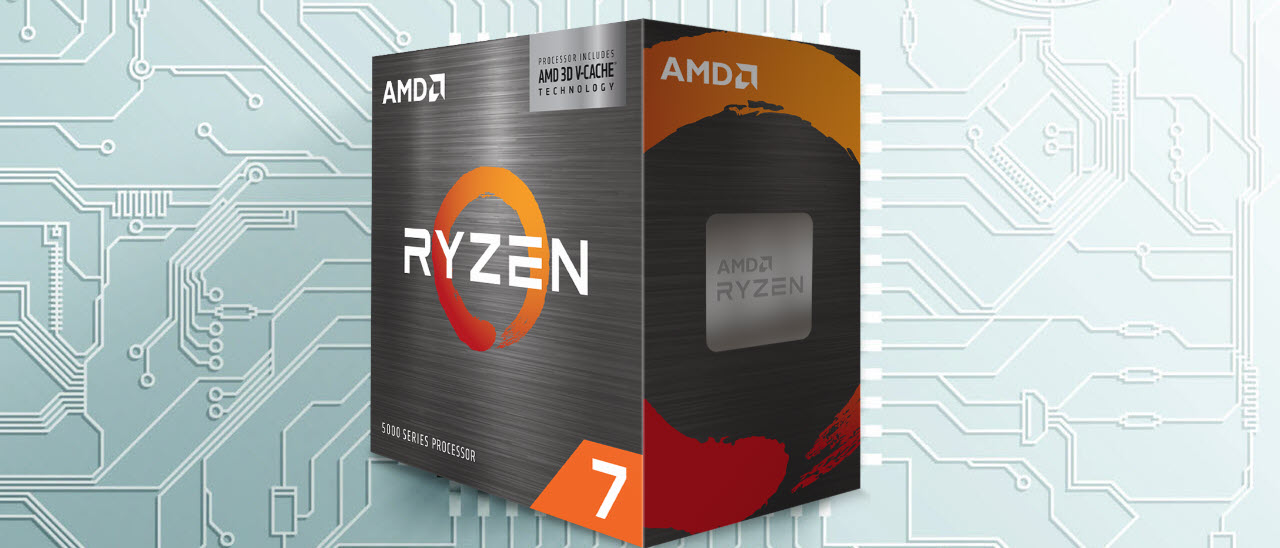
Le Ryzen 5 5700X3D à 229 $ offre les performances de jeu les plus rapides possibles dans la gamme de prix d'environ 200 $, sans conteste, mais il présente certains compromis en termes de performances dans les applications de productivité.
The Ryzen 7 5800X3D is the king of the gaming hill for the Ryzen 5000 series, but the 5700X3D has the same number of cores for 35% less cash while delivering 91% of the gaming performance of its more expensive counterpart. That’s a win for value gamers and brings AMD’s vaunted game-boosting 3D V-Cache tech to a new lower price point.
Le Ryzen 7 5700X3D est en réalité une version sous-cadencée du Ryzen 7 5800X3D, perdant 400 MHz sur ses fréquences de base et turbo. Toutes les autres caractéristiques restent inchangées, notamment les 96 Mo de cache L3, qui optimisent les performances en jeu.
Le Ryzen 7 5700X3D s'installe sur les cartes mères à socket AM4 existantes, depuis la série 300 sortie en 2017. Il constitue donc une excellente mise à niveau haute performance pour les possesseurs de Ryzen sur la plateforme AM4.
You have to be aware of the tradeoffs with this highly specialized chip. Our gaming benchmarks show that the 3D V-Cache doesn’t boost performance in all games, though we found that it impacted nearly every title we tested. The Ryzen 7 5700X3D is optimized specifically for gaming but isn’t as fast as similarly priced chips in productivity applications. Also, the Ryzen 7 5700X3D doesn’t support the latest leading-edge connectivity options, like DDR5 and PCIe 5.0.
If you’re willing to accept lower performance in productivity applications and do your homework to ensure the Ryzen 7 5700X3D accelerates the types of games you play frequently, it’s hard to go wrong—especially for upgraders with AMD AM4 systems.
Highest Performance Best CPU for Gaming – $400+
3. AMD Ryzen 9 9950X3D
Processeur le plus performant pour le jeu
Caractéristiques
Architecture : Zen 5
Socket : AM5
Cœurs/Threads : 16/32
Fréquence de base : 4,3 GHz
Fréquence de boost maximale : 5,7 GHz
TDP : 170 W
Today’s Best Deals
Raisons d'acheter
+
Puce 16 cœurs la plus rapide pour le jeu+
Performances de jeu quasi équivalentes à celles de la 9800X3D (en moyenne)+
Performance de productivité+
Entièrement overclockable+
Économe en énergie+
Prise en charge AVX-512
Raisons d'éviter
–
Tarification
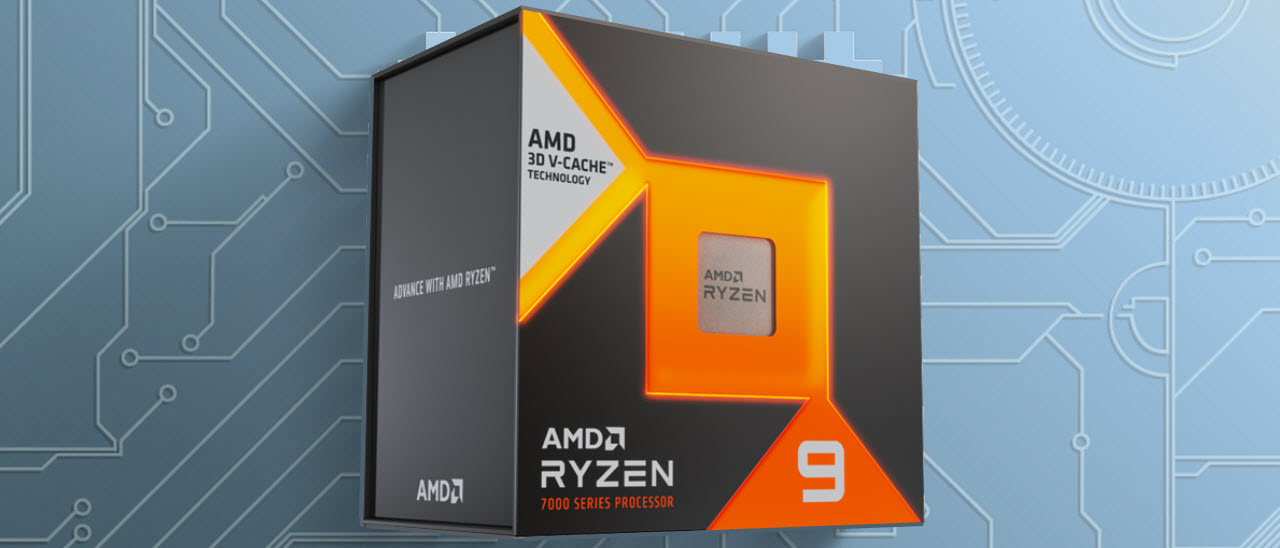
Zero compromises. That was AMD’s mission when it designed the Ryzen 9 9950X3D; from our testing, that mission was a rousing success. AMD’s 3D V-Cache technology has proven to be the killer tech that delivers dominating performance over Intel in gaming, and the second-gen revision propels the 16-core, 32-thread $699 Ryzen 9 9950X3D to a whole new level of gaming performance — all while preserving the full performance in productivity applications, a first for AMD’s gaming-optimized X3D chips.
Our CPU benchmarks show the 9950X3D is an incredible 37% faster than Intel’s flagship Core 9 285K on average in 1080p gaming. It also beats Intel’s fastest competing gaming chip, the Core i9-14900K, by 26% on average in our test suite. In fact, on average, the 9950X3D even ties the hands-down best CPU for gaming on the market, the Ryzen 7 9800X3D.
Le Ryzen 9 9950X3D impressionne également par ses performances en matière de productivité, égalant le Ryzen 9 9950X standard dans notre évaluation globale des charges de travail mono-thread et multi-thread, une performance remarquable. Il est par ailleurs 11 % plus rapide que son concurrent, l'Intel Core Ultra 9 285K, dans les charges de travail multi-thread, même si Intel conserve une avance de 7 % dans les tâches mono-thread.
Le Ryzen 9 9950X3D, basé sur l'architecture Zen 5, est doté de 16 cœurs, 32 threads, 144 Mo de cache total et une fréquence d'horloge maximale de 5,7 GHz. Il est compatible avec les cartes mères à socket AM5.
The 9950X3D uses AMD’s cutting-edge 3D chip-stacking technology, 3D V-Cache, to enable an incredible 128MB L3 cache. AMD’s game-boosting 3D V-Cache tech is now in its third generation, and this time around, AMD moved the vertically-stacked 64MB L3 cache chiplet from the top to the bottom of the compute chiplet to enable higher thermal headroom. As a result, the 9950X3D has the same 170W/230W TDP threshold as the standard Ryzen 9 9950X model instead of the 50W lower rating the company used with the previous-gen chip. That unleashes the ultimate in performance.
For those searching for the highest-end performance money can buy, if you can afford it, you won’t find a mainstream desktop PC chip that offers a stronger blend of gaming and productivity performance.

Intel Core i9-14900K
Highest Performance Best CPU for Gaming – Alternate Pick
Caractéristiques
Architecture : Raptor Lake Refresh
Socket : LGA 1700
Cœurs/Threads : 16 (8P+16E) / 32
Fréquence de base : 3,2
Fréquence d'amplification maximale : 6,0
Puissance de base du processeur : 125 W
Today’s Best Deals
Raisons d'acheter
+
Solides performances de jeu+
Prix compétitifs +
Une marge d'overclocking incroyable+
DDR5 et PCIe 5.0+
Performances mono- et multithread
Raisons d'éviter
–
Glacière non incluse.
Nécessite un système de refroidissement puissant pour des performances optimales.
Consommation d'énergie
The prior-gen $438 Core i9-14900K is now selling for all-time low pricing, primarily because the newer $629 Core Ultra 9 285K has arrived to take its place. However, the Core Ultra 9 285K is actually slower than the 14900K in gaming, so it isn’t a suitable replacement — at least not yet, but Intel is issuing patches in early December 2024 that will improve the 285K’s gaming performance. Naturally, we won’t know if those patches will change the balance of power until they arrive, so the 14900K is the better chip for now.
Il est important de noter que le Ryzen 7 14700K (mentionné ci-dessus), beaucoup plus abordable à 339 $, est seulement 2 % moins performant que le 14900K en jeu, tout en coûtant environ 100 $ de moins. Le Ryzen 7 9700X, également mentionné ci-dessus, est lui aussi moins cher et offre des performances équivalentes à celles du 14900K en jeu.
Cependant, certains inconditionnels d'Intel sont prêts à payer plus cher pour bénéficier des meilleures performances de jeu possibles sur une plateforme Intel. De plus, le 14900K offre une puissance multithread supérieure aux 14700K et 9700X, ce qui peut s'avérer utile si vous jouez, streamez et enregistrez simultanément, ou si vous effectuez d'autres tâches multitâches exigeantes pendant vos sessions de jeu. Assurez-vous simplement que votre utilisation justifie le surcoût.
Le 14900K bénéficie d'une connectivité de pointe, prenant en charge la mémoire DDR4-3200 ou jusqu'à DDR5-5600, ainsi que 16 lignes PCIe 5.0 et quatre lignes PCIe 4.0 supplémentaires de la puce pour les SSD M.2.
La puce intègre huit cœurs P compatibles avec l'hyperthreading et seize cœurs E monothread, pour un total de 32 threads. Les cœurs P fonctionnent à une fréquence de base de 3,2 GHz et peuvent atteindre une fréquence maximale de 6,0 GHz grâce à la technologie Turbo Boost Max 3.0 (fonctionnalité exclusive aux cœurs P). Les cœurs E, quant à eux, fonctionnent à une fréquence de base de 2,4 GHz et peuvent être overclockés jusqu'à 4,4 GHz via l'algorithme Turbo Boost 2.0. La puce dispose également de 36 Mo de cache L3 et de 32 Mo de cache L2.
This 14900K has a 125W PBP (base) and 253W MTP (peak) power rating, but we recorded considerably lower power consumption than its prior-gen counterpart. You’ll need to buy a capable cooler for the chip, and you’ll also need either a new 700-series or a previous-gen 600-series motherboard. You can find a wide selection of high-end motherboards that support DDR5 memory, and although you’ll only find lower-end and mid-range DDR4 motherboards, there’s still plenty of selection available.
The lower price of DDR4 might entice some gamers, but you’ll lose anywhere from 5 to 8% of gaming performance with higher-end Intel chips. You can step up to the slightly more expensive DDR5 if you need access to more memory throughput and, thus, every bit of performance possible.
Best Budget CPU Pick – $100 to $150
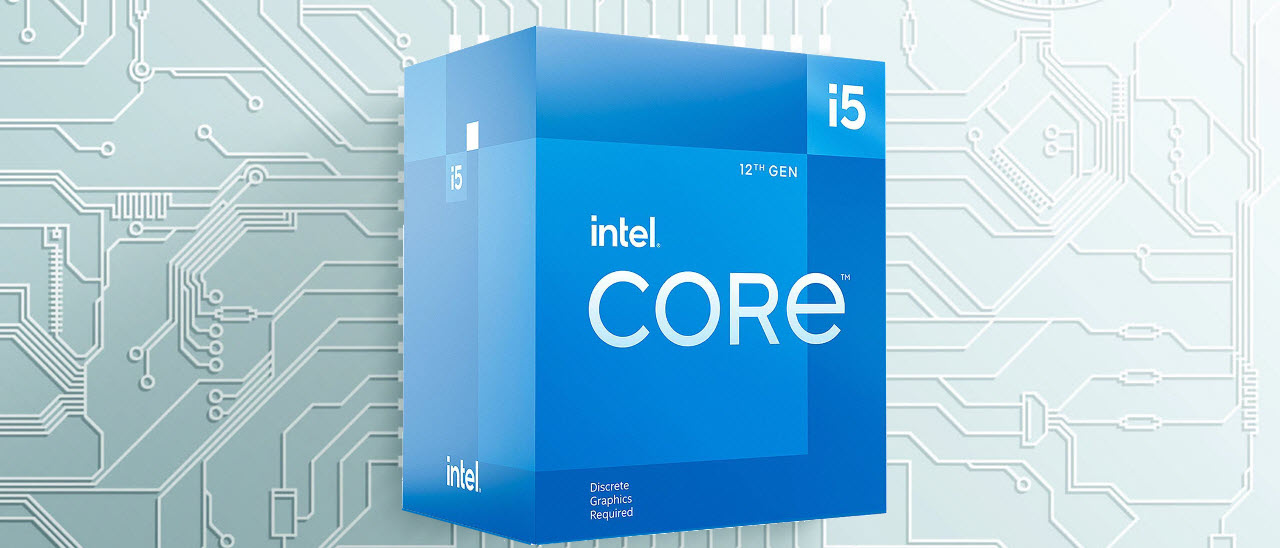
4. Intel Core i5-12400F
Meilleur processeur économique pour le jeu
Caractéristiques
Architecture : Lac Alder
Socket : LGA 1700
Cœurs/Threads : 6 (6P + 0E) / 12
Fréquence de base : 2,5
Fréquence d'amplification maximale : 4,4
TDP : 65 W / 117 W
Today’s Best Deals
Raisons d'acheter
+
Performances de jeu exceptionnelles+
Prise en charge de la DDR4+
Prise en charge de PCIe 5.0 et versions ultérieures
Performances monothread+
refroidisseur intégré suffisant
Raisons d'éviter
–
Pas de carte graphique intégrée.
Aucun overclocking des cœurs du processeur -
overclocking de mémoire limité
At $110, the graphics-less Core i5-12400F is an exceptional value, and you can step up to the $130 Core i5-12400 if you need integrated graphics. This chip is slightly faster than the alternate in this class, the Ryzen 5 5600 listed below, in both gaming and productivity work. The 12400F’s connectivity features and more modern platform are the big selling point, though. If you’re looking for support for more modern interfaces, like PCIe 5.0, DDR5 et DDR4, this chip makes even more sense — AMD’s Ryzen 5 5600 only supports DDR4 and PCIe 4.0.
Le Core i5-12400F est doté de six cœurs physiques (P-cores) et de douze threads, mais ne possède pas de cœurs d'exécution (e-cores). À l'inverse, son prédécesseur, le 13400F, que nous recommandons, dispose de quatre e-cores pour des performances accrues dans les applications multithread. Le 12400F possède une fréquence de base de 2,5 GHz et une fréquence turbo maximale de 4,4 GHz. Il est également équipé de 18 Mo de cache L3 et affiche une consommation de 65 W (PBP de base) et de 117 W (MTP de crête).
Le processeur Core i5-12400F est compatible avec le socket 1700, un écosystème économique et répandu. Les cartes mères des séries 600 et 700 conviennent donc parfaitement. Naturellement, un modèle de la série B sera le choix idéal pour ce type de processeur. La mémoire vive est disponible en DDR4 ou DDR5 ; assurez-vous donc de choisir une carte mère compatible avec le type de RAM que vous souhaitez utiliser.
The Core i5-12400F also comes with a competent bundled cooler, but we always recommend stepping up to a more capable third-party model, some of which can be found as for as low as $20 if you’re particularly price sensitive. All in all, the Core i5-12400F at this price point is a solid chip for a budget system.
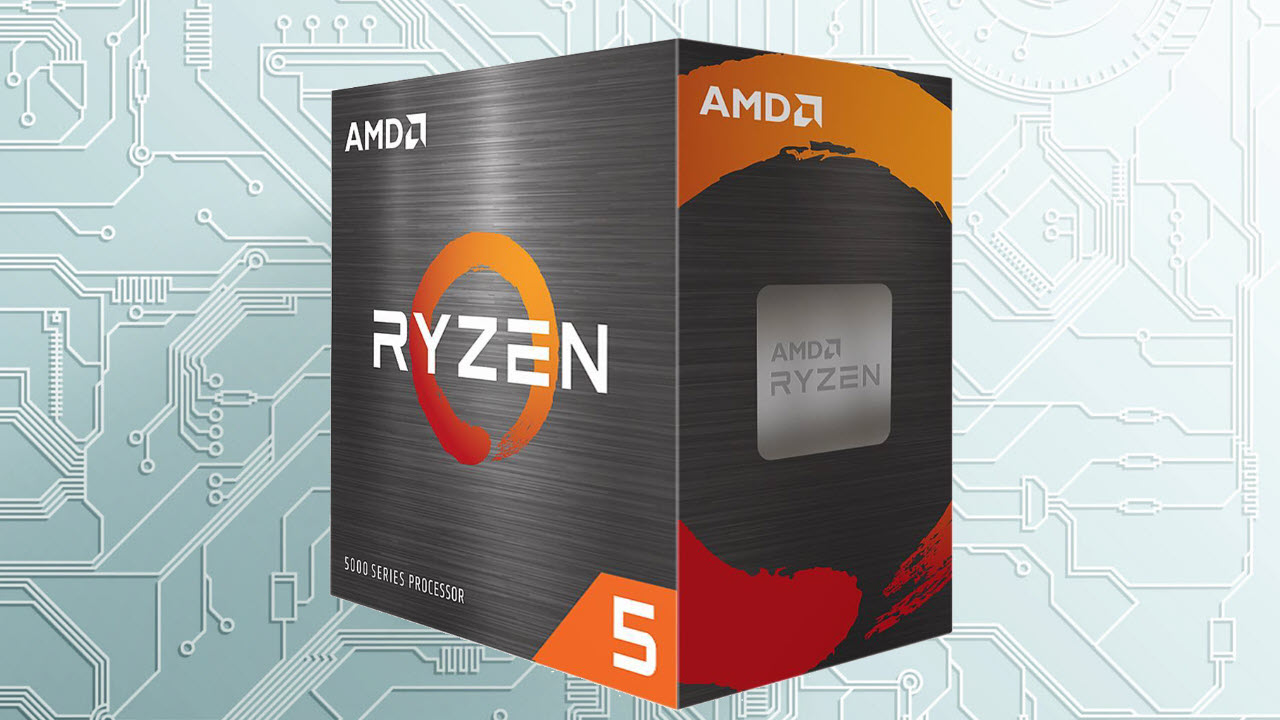
AMD Ryzen 5 5600
Budget Best CPU for Gaming – Alternative
Caractéristiques
Architecture : Zen 3
Socket : AM4
Cœurs/Threads : 6 / 12
Fréquence de base : 3,7 GHz
Fréquence de boost maximale : 4,6 GHz
TDP : 65 W
Today’s Best Deals
Raisons d'acheter
+
Performances de jeu et d'application compétentes+
Une voie de mise à niveau fiable pour les possesseurs de Ryzen 1000+
Refroidisseur de processeur inclus+
Overclockable+
Large compatibilité avec les cartes mères de la série 300
Raisons d'éviter
–
Son rapport qualité-prix est médiocre comparé aux puces Intel.
Pas de GPU intégré
Le 5500 ne prend en charge que PCIe 3.0
The $107 AMD Ryzen 5 5600 delivers a solid blend of performance in both gaming and productivity applications, bringing a new level of value to the Zen 3 lineup. If you’re fine sticking with a previous-gen AM4 motherboard, the Ryzen 5 5600 makes a great budget build. The primary trade-off for the AM4 platform is that you’re limited to DDR4, and you don’t have access to PCIe 5.0, but this isn’t a problem for most users at this price point. However, the Core i5-12400F is a better deal if you’re looking for DDR5 and PCIe 5.0 support.
The Ryzen 5 5600 also makes an absolutely unbeatable budget chip if you’re updating a first-gen Ryzen system. The 5600 unseats the Ryzen 5 5600X, un modèle très apprécié depuis longtemps. Le 5600X n'est que légèrement plus rapide (~1 %) que le modèle non-X en matière de jeux et de tâches multithread, mais offre un avantage de 4 % en matière de tâches monothread.
Le Ryzen 5 5600 (six cœurs et douze threads) est disponible à 107 $, un prix fortement réduit en raison de la concurrence d'Intel. Nos tests montrent d'ailleurs que le Ryzen 5 5600 offre des performances de jeu globalement équivalentes à celles de son grand frère plus cher, le Ryzen 7 5800X (environ 175 $). Le 5600 se révèle ainsi un processeur incroyablement polyvalent, capable de gérer efficacement le jeu, des performances compétitives avec des écrans à taux de rafraîchissement élevé aux applications multitâches comme le streaming, tout en offrant des performances largement suffisantes pour les applications bureautiques quotidiennes. Comme pour tous les processeurs AMD dédiés au jeu, l'overclocking est entièrement possible.
The Ryzen 5 5600 has a 3.7 GHz base and 4.6 GHz boost clock. The chip also has a 65W TDP rating, so it runs cool and quiet. Existing AMD owners with a 500-series motherboard will be happy, as the 5600X drops right into existing 500-, 400-, and 300-series motherboards. If you need a new motherboard to support the chip, AMD’s AM4 motherboards are plentiful and relatively affordable, with the B-series lineup offering the best overall value for this class of chip.
Entry-Level Best CPU for Gaming – For gaming on integrated GPUs
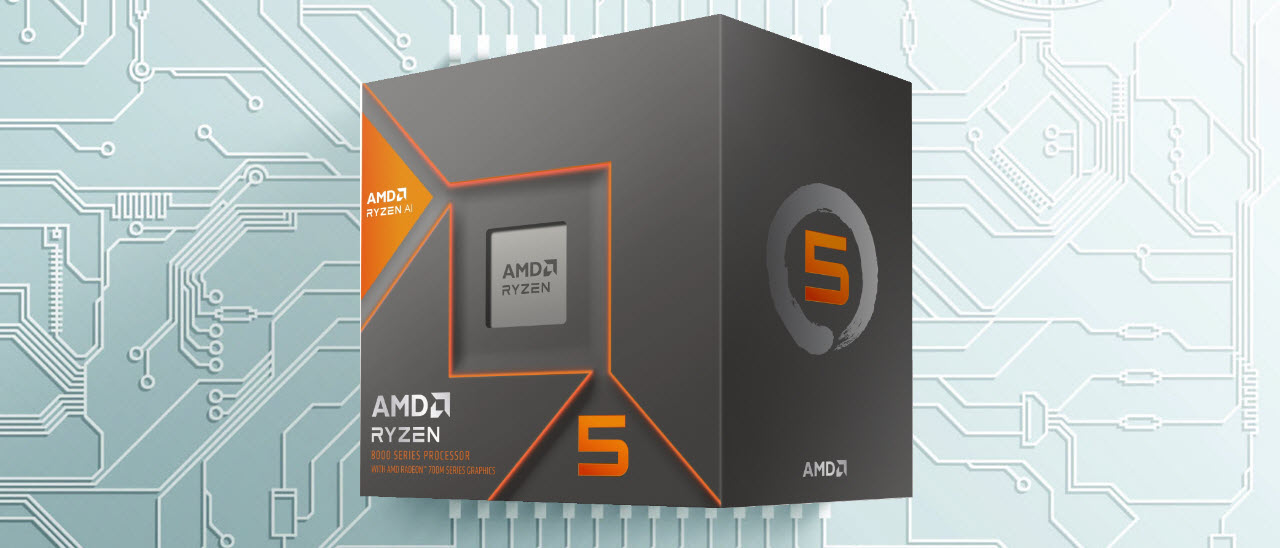
5. AMD Ryzen 5 8600G
Meilleur processeur d'entrée de gamme pour le jeu
Caractéristiques
Architecture : Zen 4
Socket : AM5
Cœurs/Threads : 6 / 12
Fréquence de base : 4,3 GHz
Fréquence de boost maximale : 5,0 GHz
TDP : 65 W
Today’s Best Deall
Raisons d'acheter
+
+Conditions acceptables en 1080p sur certains titres, performances solides en 720p+
+Prise en charge Hyper-RX+
+Glacières groupées+
+Efficacité énergétique
Raisons d'éviter
–
Prix plus élevés pour la DDR5, pas d'options 8 Go -
Les cartes mères AM5 restent chères.
The $278 Ryzen 7 8700G, AMD’s flagship APU, delivers the fastest performance on the market from integrated graphics, bringing passable 1080p gaming to the desktop PC without a discrete graphics card, but its high price point relegates it to a niche audience. In contrast, the $170 Ryzen 5 8600G delivers 90% of the 8700G’s performance but for ~$110 less, making it a solid alternative for gaming systems that don’t use a discrete GPU.
Naturally, you’ll have to accept lower fidelity settings and be realistic about which titles can play at 1080p resolution. Still, AMD’s Hyper-RX suite of features, which includes in-driver Radeon Super Resolution upscaling tech, frame generation with AMD Fluid Motion Frames (AFMF), Anti-Lag+, and Radeon Boost, helps boost performance at a slight cost to image quality. This new feature set, a first for AMD’s iGPUs, is a boon for budget gamers.
The Ryzen 5 8600G has six Zen 4 CPU cores and the RDNA 3 GPU engine with eight CUs. The Ryzen 5 8600G drops into the AM5 platform, with value-focused B650 and A620 motherboards being the obvious best combination. These systems offer a new level of connectivity for AMD’s APU processors, which were previously on the aging AM4 platform but require DDR5 memory. That adds some cost, so do a value analysis before selecting this processor. If you’re looking for the lowest entry price possible with an APU, the Ryzen 5 5600G listed below slots in as the value alternative.
The Ryzen 7 8600Gs only supports 16 usable lanes of PCIe 4.0 connectivity, while other processors on the AM5 platform support PCIe 5.0. However, we don’t feel this will impact this class of system.
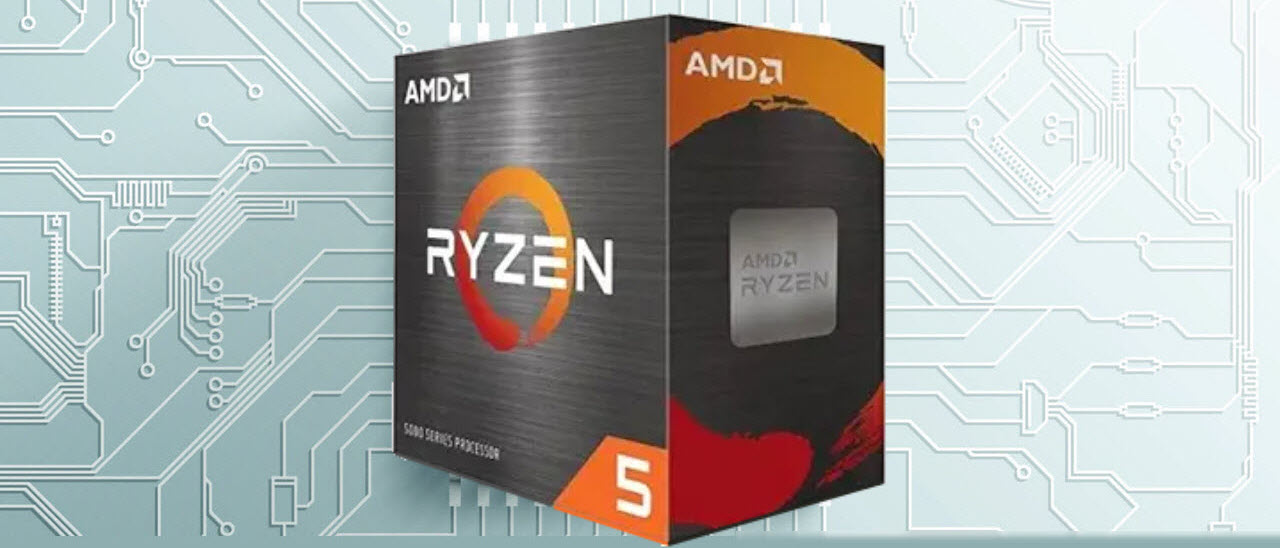
AMD Ryzen 5 5600G
Meilleur processeur d'entrée de gamme pour le jeu — Alternative
Caractéristiques
Architecture : Zen 3
Socket : AM4
Cœurs/Threads : 6/12
Fréquence de base : 3,9 GHz
Fréquence de boost maximale : 4,4 GHz
TDP : 65 W
Today’s Best Deals
Raisons d'acheter
+
Rapport prix-performance exceptionnel+
Cœurs de processeur Zen 3 plus rapides+
Qualité acceptable en 1080p, bonne en 720p+.
Excellente consommation d'énergie et efficacité+
Grande marge d'overclocking+
Glacière incluse+
Compatible avec certaines cartes mères AM4
Raisons d'éviter
–
connectivité PCIe 3.0
The Ryzen 5 5600G steps into the arena as the value champ for APUs, which are chips with strong enough integrated graphics that they don’t require a discrete GPU for light gaming—just be sure you’re willing to accept lowered quality settings.
At $120, the Ryzen 5 5600G gives you 96% of the gaming performance on integrated graphics than its more expensive sibling, the $160 Ryzen 7 5700G, but for 25% less cash. Our testing shows that its level of performance makes it the best value APU on the market. As long as you’re willing to sacrifice fidelity and resolution and keep your expectations in check, the Ryzen 5 5600G’s Vega graphics have surprisingly good performance in gaming.
The 5600G’s Vega graphics served up comparatively great 1280×720 gaming across numerous titles in our tests, but options become more restricted at 1080p. Of course, you can get away with 1080p gaming, but you’ll need to severely limit the fidelity settings with most titles.
Avec ses huit cœurs et seize threads cadencés à 3,9 GHz (jusqu'à 4,4 GHz en mode Turbo), le Ryzen 5 5600G offre d'excellentes performances pour son prix dans les applications PC de bureau classiques. Livré avec un système de refroidissement Wraith Stealth, il est compatible avec les cartes mères des séries 500 et 400 (certaines de ces dernières, bien que la compatibilité varie selon les fabricants).
If your budget is tight and you’re looking to build a system for modest gaming, you should check out our Best Cheap CPU feature. Some of those chips can deliver passable gaming performance without a graphics card, and their prices start at just $55 (£40).
 English
  German
  Spanish
  Japanese
  French